
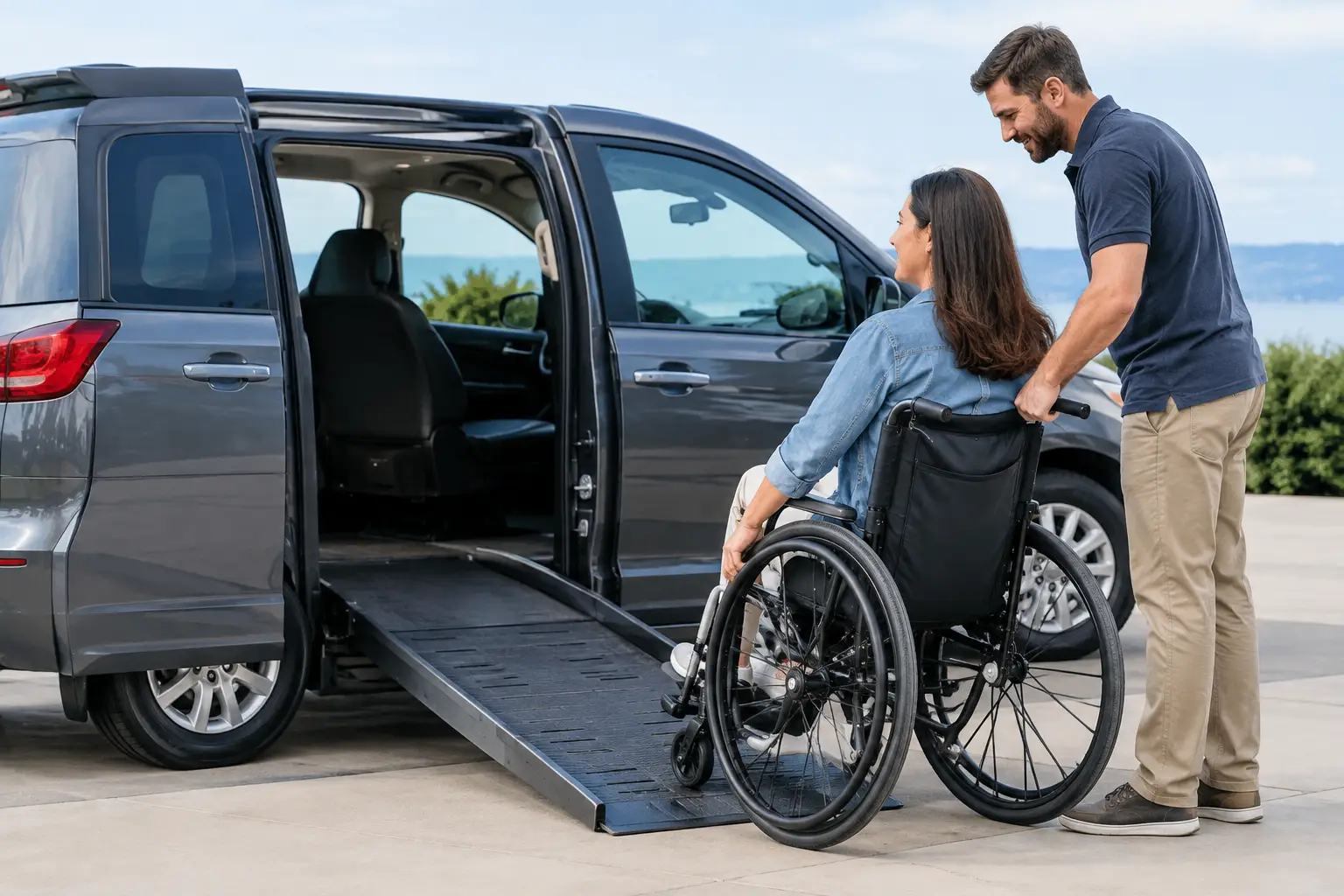
A good wheelchair van comfort review starts before the vehicle moves. It begins at the curb: Can the passenger enter without feeling rushed? Is there enough room to position the wheelchair comfortably? Does the ride feel calm and secure once the door closes? For people traveling to appointments, visiting family, catching a flight, or handling everyday errands, these details can shape the entire day.
Comfort in accessible transportation is not one feature. It is the combination of safe boarding, proper wheelchair securement, enough personal space, a considerate driver, and a ride that does not feel unnecessarily rough or stressful. The right vehicle and service can make a short local trip feel simple rather than exhausting.
What Comfort Means in a Wheelchair-Accessible Van
A wheelchair-accessible van should give the passenger room to travel in a stable, dignified position. That means more than having a ramp or lift. The entry system needs to be well maintained, the interior needs to be clean and uncluttered, and the wheelchair position should allow reasonable space around the passenger.
Ride quality matters as well. Accessible vans are often larger and heavier than standard sedans, so they can feel different on the road. A well-driven van should accelerate gradually, take turns smoothly, and avoid abrupt braking whenever traffic conditions allow. For passengers managing pain, fatigue, recovery, or limited mobility, gentle driving is a real part of comfort.
Temperature, ventilation, and noise also deserve attention. A cabin that is too hot, too cold, or overly noisy can make an otherwise manageable trip unpleasant. While no vehicle can eliminate road noise completely, a clean, well-kept van with working climate control creates a far more comfortable environment.
Entry and Exit Set the Tone for the Ride
The most stressful part of an accessible trip can be getting in or out. A comfortable experience allows enough time for the ramp or lift to be deployed properly and for the wheelchair to be guided into place without pressure. Passengers should never feel that they need to hurry because traffic is waiting or because the driver has another pickup scheduled.
There are two common access approaches: ramps and lifts. A ramp can offer a gradual entry and may be convenient for many manual and powered wheelchairs. A lift raises the wheelchair from ground level into the vehicle and can be useful where a ramp angle would be difficult. Neither option is automatically better for every passenger. The best choice depends on the wheelchair, the passenger’s comfort level, and the pickup location.
A smooth boarding process also depends on the surface outside the vehicle. Sloped driveways, snow, heavy rain, narrow loading areas, and uneven curbs can affect the experience. When booking, it helps to mention any access conditions that may require extra care. Clear information gives the transportation provider a better chance to plan appropriately.
Securement Should Feel Stable, Not Restrictive
Once inside, the wheelchair must be secured using the correct equipment and procedures. Proper securement keeps the chair from shifting during turns, stops, or uneven road conditions. It should feel stable, but the passenger should not be positioned awkwardly or left without a chance to confirm they are comfortable.
The best accessible rides are not rushed through this step. A trained driver checks that tie-downs or restraint systems are correctly attached, confirms that the passenger is ready, and adjusts the process when reasonable. If a passenger has preferences about positioning, communication, or the way assistance is provided, sharing them before departure can make future trips more comfortable.
Cabin Space Makes a Bigger Difference Than Many Expect
Wheelchair vans need practical space, not just the minimum amount required to fit a wheelchair inside. Extra room can make it easier to enter, turn, and settle into position. It can also help when a companion is traveling with the passenger or when there are essential personal items to bring along.
For a routine trip across town, a compact accessible layout may be perfectly suitable. For a longer journey, however, cabin space becomes more important. The passenger may need room to adjust their position, access belongings, or travel with a family member. If the trip includes airport luggage, medical equipment, or multiple passengers, ask about the vehicle layout before reserving.
Headroom is another overlooked comfort factor. A passenger should not have to worry about overhead clearance while entering or riding. Door openings, ramp placement, and interior height vary by vehicle, especially for powered wheelchairs and taller seating positions.
A Wheelchair Van Comfort Review Should Include the Driver
Even an excellent vehicle can feel uncomfortable with inattentive service. The driver has a direct effect on safety, privacy, timing, and peace of mind. Professional accessible transportation calls for patience, awareness, and a willingness to communicate clearly without being intrusive.
A helpful driver confirms the destination, chooses a sensible loading location, operates the access equipment carefully, and drives with the passenger’s comfort in mind. For medical appointments, punctuality matters because late arrival can create added stress. For airport trips, planning enough time for loading and traffic is just as valuable as the ride itself.
Respectful assistance also means recognizing that every passenger has different needs. Some travelers want help with the entry process; others prefer to direct it themselves. Asking before assisting is a simple courtesy that supports independence and comfort.
What to Ask Before You Book
A few clear questions can prevent surprises. You do not need to provide more personal information than necessary, but the transportation provider should know the basics required to send an appropriate vehicle.
Consider confirming the wheelchair’s approximate size, whether it is powered or manual, the number of accompanying passengers, and whether there will be extra luggage or equipment. It is also useful to mention if the pickup or drop-off has limited access, such as a busy medical center entrance or a narrow residential driveway.
For a long-distance ride, ask about estimated travel time, planned stops if needed, and how the vehicle will accommodate the full trip. Comfort for a 15-minute local ride and comfort for several hours on the road are not the same thing. A reliable provider should be able to explain what vehicle is being dispatched and help set practical expectations.
Comfort Trade-Offs to Keep in Mind
Accessible vans prioritize safe wheelchair entry and secure travel, which can involve trade-offs. A larger van may offer more interior room but can take longer to load and maneuver in tight spaces. A ramp may feel more gradual, while a lift may be better suited to certain wheelchairs or locations. More passengers can make a trip feel more social and convenient, but may reduce available space for luggage and personal belongings.
The right arrangement depends on the purpose of the ride. A passenger going to a nearby clinic may value a quick, easy pickup. Someone traveling to Toronto Pearson International Airport may need additional time, room for bags, and a driver familiar with managing a smooth curbside drop-off. The goal is not to find one perfect vehicle for every situation. It is to match the vehicle and service to the actual trip.
Planning a More Comfortable Accessible Ride
Booking ahead is one of the simplest ways to improve the experience. Advance reservations help ensure that an appropriate wheelchair-accessible vehicle is available when needed, especially for early appointments, airport departures, or trips during busy travel periods.
Mississauga Taxi provides wheelchair-accessible transportation for passengers who need dependable door-to-door service. When arranging a ride, share the pickup time, destination, wheelchair details, and any travel considerations that could affect access. That preparation helps the driver arrive ready and helps the passenger begin the trip with fewer concerns.
A comfortable accessible ride should leave the passenger feeling supported, not worn out by the transportation process. Choosing a properly equipped vehicle, allowing enough time, and communicating the essentials before pickup can turn an important trip into a much easier part of the day.